.jpg)
Chimney Repointing Explained: What Victoria Homeowners Need to Know About Tuckpointing
As a homeowner in Greater Victoria or the Cowichan Valley, you understand the toll that British Columbia's relentless weather can take on your property. Heavy rainfall, high humidity, coastal salt air, and frequent freeze-thaw cycles make maintaining your chimney's masonry a top priority. At Island Chimney Solutions, we've specialized in chimney repointing (also known as tuckpointing) for years, helping countless residents in Victoria, Langford, Duncan, and surrounding areas preserve their homes' structural integrity and safety. This complete guide dives deep into everything you need to know about chimney repointing—from what it is and why it's essential to signs of failure, the professional process, costs, and more.
Repointing isn't just a cosmetic fix; it's a critical maintenance step that prevents water damage, extends your chimney's lifespan, and ensures compliance with BC Building Codes. In older brick or stone chimneys common in heritage neighborhoods like Oak Bay or James Bay, deteriorating mortar can lead to costly rebuilds if ignored. Whether you're dealing with a leaky fireplace or planning a home renovation, this evergreen resource will equip you with the knowledge to make informed decisions. Let's break it down step by step.

What Is Chimney Repointing (Tuckpointing)?
Repointing, often interchangeably called tuckpointing, is the process of renewing the external part of mortar joints in masonry structures like chimneys. Over time, mortar—the "glue" holding bricks or stones together—deteriorates due to weathering, settling, or poor initial installation. Repointing involves removing the old, damaged mortar and replacing it with fresh material to restore strength, waterproofing, and appearance.
The term "tuckpointing" specifically refers to a refined technique where a thin line of contrasting mortar (often white or colored) is applied over the main joint for an aesthetic illusion of finer joints. This was popular in historical masonry to mimic the look of expensive, precisely cut bricks. In modern applications, especially for chimneys, tuckpointing is optional and often used for heritage restorations. Standard repointing focuses more on functionality: sealing gaps to prevent water infiltration and structural weakness.
Why does this matter for your chimney? Chimneys are exposed to the elements year-round, venting hot gases while battling rain, wind, and temperature swings. Without solid mortar, bricks can shift, crack, or spall (flake off), compromising the entire system. In BC, where chimneys must meet strict codes for fire safety and seismic resilience, repointing ensures your setup remains code-compliant and safe for wood-burning or gas fireplaces.
Key components of repointing:
-
Mortar Composition: Modern mixes use lime-based or cement-based mortars tailored to the original material (e.g., softer Type N or O for older bricks to avoid damage from harder modern cement).
-
Depth: Typically, old mortar is removed to about ¾ to 1 inch deep to create a strong bond.
-
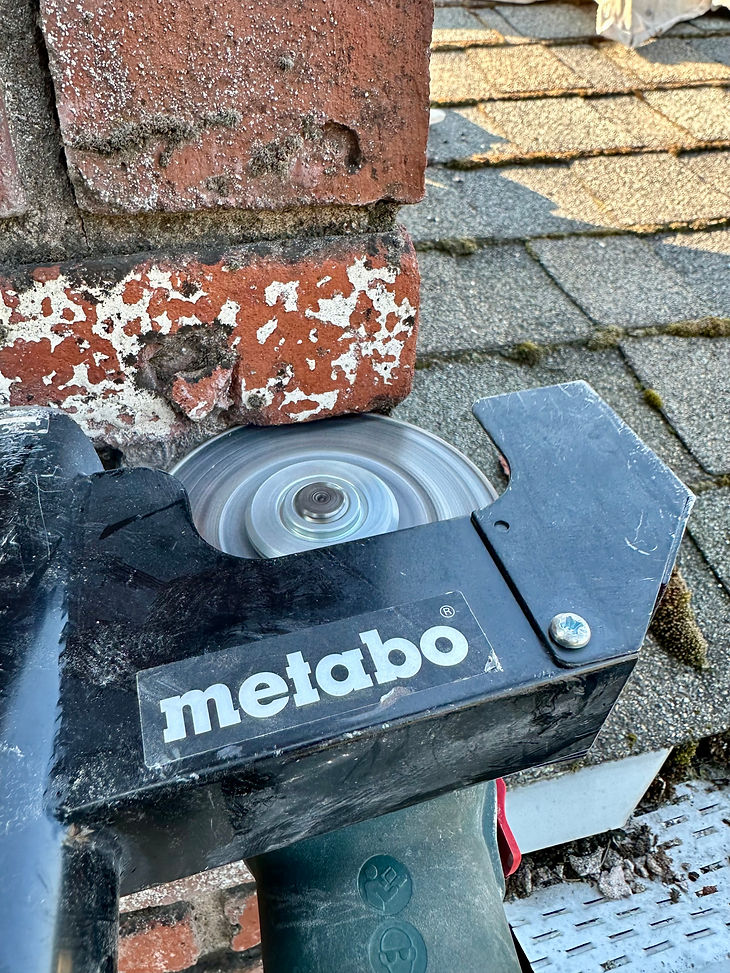
Tools Involved: Chisels, grinders, brushes, pointing trowels, and sometimes vacuum systems for dust control.
If your home was built before the 1950s, as many in Victoria were, the original mortar likely contains lime, which is more flexible but erodes faster in our damp climate. Understanding this helps you appreciate why professional matching is crucial—mismatched mortar can cause further cracking.
Vancouver Island's weather is a chimney's worst enemy. With average annual precipitation exceeding 1,200 mm in Victoria and even higher in the Cowichan Valley (up to 2,000 mm in some spots), moisture is a constant threat. Add in coastal humidity levels often above 80%, salt-laden winds from the Strait of Georgia, and winter freeze-thaw cycles (where temperatures dip below freezing 20–30 days a year), and mortar breakdown accelerates dramatically.
Here's how BC's climate contributes:
-
Water Penetration: Rain doesn't just fall; it's driven sideways by winds up to 100 km/h during storms. Tiny gaps in mortar absorb this water like a sponge, leading to internal expansion and cracking when it freezes.
-
Freeze-Thaw Damage: Water in mortar joints expands by about 9% when it turns to ice, exerting pressure that crumbles the material over repeated cycles. This is especially prevalent in exposed chimneys above the roofline.
-
Humidity and Moss Growth: Persistent dampness promotes algae, moss, and lichen, which retain moisture and produce acids that erode mortar. In shaded or north-facing chimneys common in forested areas like Duncan, this is a frequent issue.
-
Salt Air Corrosion: Proximity to the ocean (e.g., in Sidney or Sooke) introduces airborne salts that crystallize in mortar, causing efflorescence (white powdery stains) and weakening bonds.
-
Seismic and Settling Factors: BC's earthquake-prone region means minor ground shifts can widen joints, exacerbating weather damage.
Without repointing, these issues cascade: Water enters the chimney, damaging liners, causing rust in dampers, or leading to leaks in your home's interior. In older Victoria brick chimneys—think Edwardian or Victorian-era homes in Fairfield or Rockland—mortar often fails after 50–70 years, far sooner than in drier climates. Repointing can extend a chimney's life by 10–20+ years, preventing the need for a full rebuild (which could cost $10,000–$25,000+). It's also a proactive step for insurance compliance, as many policies require regular maintenance to cover fire or water damage claims.
Local regulations amplify the need: The BC Building Code (Part 9) mandates that chimneys be watertight and structurally sound, with proper flashing and crowns. WETT (Wood Energy Technology Transfer) certifications for inspections often flag failing mortar as a hazard for wood-burning systems.
Why Repointing Is Needed in BC's Wet Climate

Signs Your Chimney Mortar Is Failing
Catching mortar issues early saves money and hassle. Inspect your chimney annually (or after major storms) from the ground with binoculars or hire a pro for a Level 2 WETT inspection. Here are the top signs of failing mortar, tailored to our island environment:
-
Crumbling or Powdery Mortar: If joints feel soft or sandy to the touch (test gently with a screwdriver), erosion has set in. In humid BC, this can happen in as little as 20–30 years for exposed sections.
-
Gaps or Missing Mortar: Visible voids wider than 1/8 inch allow water entry. Look for "honeycombing" where mortar has washed away, common after heavy rains.
-
Efflorescence (White Stains): Salty deposits on bricks indicate moisture migrating through joints. While you can clean it, recurring efflorescence signals deeper mortar failure.
-
Spalling Bricks: Flaking or popping brick faces often stem from water-saturated mortar. Freeze-thaw exacerbates this, leading to chunks falling off— a safety hazard.
-
Leaning or Bulging Sections: Uneven mortar wear can cause bricks to shift, especially in older, unlined chimneys. Seismic activity in Vancouver Island amplifies this risk.
-
Indoor Water Damage: Stains on ceilings/walls near the fireplace or musty odors suggest leaks via deteriorated joints.
-
Increased Creosote Buildup or Poor Draft: Water-damaged mortar can indirectly affect venting, leading to smoke issues or higher fire risks.
If you spot two or more signs, don't delay—untreated failure can lead to chimney collapse or fires. In Victoria's heritage homes, failing mortar might also violate municipal preservation bylaws.

Professional repointing is meticulous to ensure longevity. At Island Chimney Solutions, we follow a proven method, using dust-control measures for safety and cleanliness. Here's how it unfolds:
-
Inspection and Preparation: A certified mason assesses the chimney (often with cameras for hidden issues). We protect surrounding areas with tarps and set up scaffolding for safe access above the roof.
-
Mortar Removal: Using chisels, grinders, or pneumatic tools, deteriorated mortar is raked out to ¾–1 inch deep. This "key" ensures the new mortar bonds well. We avoid damaging bricks by matching tool hardness.
-
Cleaning Joints: Joints are brushed, vacuumed, and flushed with water to remove dust and debris. In moss-prone areas, we apply cleaning techniques to prevent regrowth.
-
Mortar Mixing: We custom-mix mortar to match the original in color, texture, and composition (e.g., lime-rich for historic chimneys). Additives for waterproofing or flexibility are included based on your chimney's needs.
-
Application: New mortar is "tucked" into joints with a pointing trowel, packed firmly, and tooled to the desired profile (concave for water shedding). For tuckpointing, a thin contrasting line is added for aesthetics.
-
Curing and Finishing: Mortar cures slowly (mist-sprayed to prevent cracking in dry spells). We clean excess and apply an acid-wash if needed.
-
Final Inspection: We check for uniformity and test for leaks, ensuring compliance with BC codes.
The process takes 1–5 days, depending on chimney size (e.g., 20–40 feet tall). Weather permitting—avoiding rain or freezing temps—is key in our climate.
The Step-by-Step Repointing Process

Costs and Timelines for Chimney Repointing
-
Costs vary by chimney height, accessibility, material matching, and extent (partial vs. full). In Greater Victoria:
-
Small Chimney (Single-Story, Partial Repoint): $2,000–$4,000 (1–2 days).
-
Medium (Two-Story, Full Above Roof): $4,000–$6,000 (2–3 days).
-
Large/Heritage (Full Rebuild Above Roof): $6,000–$10,000+ (3–5 days).
-
Factors influencing price: Scaffolding ($650–$2,000), heritage restrictions (extra matching costs), or add-ons like crown repairs ($1200–$1,800). Timelines assume good weather; delays in rainy seasons are common.
-
Get multiple quotes, but prioritize WETT-certified, insured pros with warranties (we offer 5 years).

DIY repointing appeals to handy homeowners, but it's risky for chimneys. Scaffolding is typically required to safely transport tools and materials to the chimney. Pre-mixed mortar bags ($20/bag), chisels ($50), and trowels are affordable, but mistakes are costly.
Pros of DIY:
-
Cost savings (materials ~$200–$1200).
-
Satisfaction of hands-on work.
Cons:
-
Safety hazards: Working at heights without proper scaffolding.
-
Skill gaps: Improper depth or mismatched mortar can trap moisture, worsening damage.
-
Time-intensive: A weekend project can stretch to weeks for novices.
-
Code risks: Non-compliant work voids insurance or fails inspections.
In BC's climate, pros like us use specialized equipment (e.g., HEPA vacuums for silica dust) and knowledge of local materials. We recommend DIY only for minor cosmetic spots below roof level—leave structural work to experts to avoid $5,000+ in fixes.
DIY vs. Professional Repointing: What's Best?

Benefits of Repointing and Prevention Tips
-
Repointing delivers immediate and long-term value:
-
Waterproofing: Seals against leaks, preventing interior damage and mold.
-
Structural Stability: Reinforces against wind, quakes, and settling.
-
Energy Efficiency: Better draft reduces heating costs.
-
Aesthetic Upgrade: Restores curb appeal, boosting home value (up to 5–10% in heritage areas).
-
Safety: Lowers fire and CO risks by maintaining venting integrity.
-
Longevity: Adds 10–20+ years, delaying rebuilds.
-
Prevention: Schedule annual inspections, install chimney caps ($200–$500) to block rain/debris, ensure proper flashing, and clean gutters to divert water.
-
At Island Chimney Solutions, we're your local repointing specialists, serving Greater Victoria and Cowichan Valley with tailored solutions. If your chimney shows signs of mortar failure, contact us for a free assessment.
Ready to address those chimney concerns?
At Island Chimney Solutions, we specialize in expert chimney repair, repointing, rebuilding, and restoration for homes throughout Greater Victoria, Langford, Cowichan Valley, and Duncan, BC. With decades of combined masonry experience and a focus on bringing older chimneys up to current BC codes, we're here to keep your home safe and warm year-round—rain or shine.
Call or text us today at 250-986-6000, email info@islandchimney.ca, or visit our contact page to book a free consultation or inspection.
Island Chimney Solutions #110 - 1021 Springboard Place, Victoria, BC V9B 3E2
Open Monday–Saturday 8:00 am – 5:00 pm